Physiological Rationale for Enhancing Nitrogen Balance in Catabolic States via a Molecularly Structured Protein Matrix (MSPM) and Neuroacoustic Stimulation Protocol (NASP)
Volodymyr Naumenko
Founder & CEO, Patented MT Company (Vilnius, Lithuania)
Academician of the Ukrainian Technological Academy
Department of Modern Medical Technologies and Ecology
ORCID: 0009-0000-3965-5205
Abstract: This paper discusses a theoretical framework for managing severe catabolic states associated with wasting syndromes. We propose a multimodal approach that combines a Molecularly Structured Protein Matrix (MSPM) with a Neuroacoustic Stimulation Protocol (NASP). The hypothesis suggests that such a combination may facilitate amino acid availability while potentially reducing energy expenditure and modulating autonomic responses to support systemic regeneration.
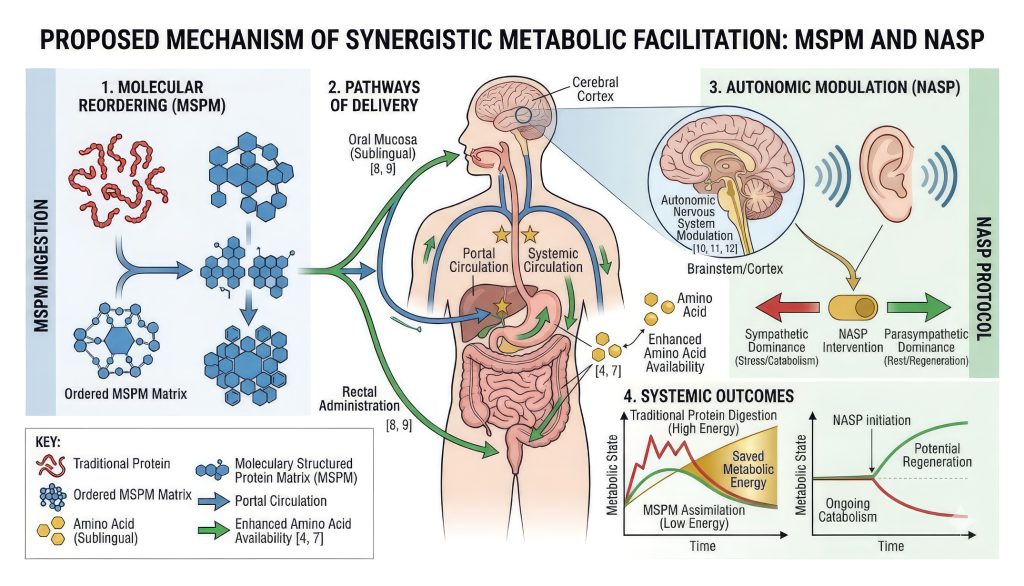
Figure 1. Graphical Abstract of the Proposed Synergistic Mechanism. Visual representation of the integration between Molecularly Structured Protein Matrix (MSPM) technology, distinct routes of amino acid delivery, the Neuroacoustic Stimulation Protocol (NASP), and their combined systemic metabolic outcomes.
Introduction: The Problem of Metabolic Stress
In conditions characterized by pronounced catabolism (e.g., advanced oncological
processes, cachexia), the body often faces a paradox: a critical need for amino acid nitrogen coupled with a diminished capacity for digestion and protein synthesis [2][5]. Traditional nutritional support may be limited by the high energetic cost of enzymatic protein breakdown and stress-induced sympathetic dominance [6][12].
2. The MSPM Concept: Structural Facilitation of Nitrogen Assimilation
The MSPM (Molecularly Structured Protein Matrix) technology is based on the structural organisation of protein components into an ordered state.
• Hypothesis: It is suggested that this molecular organisation may lower the activation energy required for enzymatic hydrolysis, potentially making amino acids more readily available for absorption [4][7].
• Potential Benefit: This approach might be particularly relevant in cases where gastrointestinal functional activity is reduced, potentially allowing for the maintenance of a positive nitrogen balance with minimal metabolic load [1][3].
Supporting Data: The metabolic potential of MSPM was evaluated in 2019 using a biological model of poultry (layers) in states of extreme physiological exhaustion. Despite a diet significantly deficient in crude protein (23–28% below norm), the introduction of MSPM (0.1–0.2% of feed) resulted in the complete restoration of productivity and a stabilized nitrogen balance [13]. These findings suggest that the
molecular structure of the matrix effectively bypasses conventional enzymatic limitations.
3. Neuroacoustic Stimulation Protocol (NASP) as a Regulatory Component
The NASP (Neuroacoustic Stimulation Protocol) is proposed as a non-invasive method to modulate the autonomic nervous system.
• Mechanism: Based on current neurophysiological theories, specific acoustic stimulation may aid in shifting the autonomic balance toward parasympathetic dominance [11][12].
• Implications: Such a shift might contribute to reducing stress-induced catabolism. We hypothesise that NASP could create a physiological “window” more favorable for the utilization of available protein resources for regenerative purposes [10].
4. Integration of MSPM and NASP: A Synergistic Perspective
The integration of MSPM and NASP represents a comprehensive model of bioregulation.
• Routes of Delivery: Considering the potential limitations of the aggressive gastric environment, sublingual and rectal routes are discussed as means to deliver low-molecular-weight components directly into the systemic circulation [8][9].
• Theoretical Outcomes: It is anticipated that this dual-action model may support the stabilization of body mass and improve functional status by addressing both the substrate (amino acids) and the regulatory environment (autonomic tone) [1][2].
5. Technical and Safety Validation
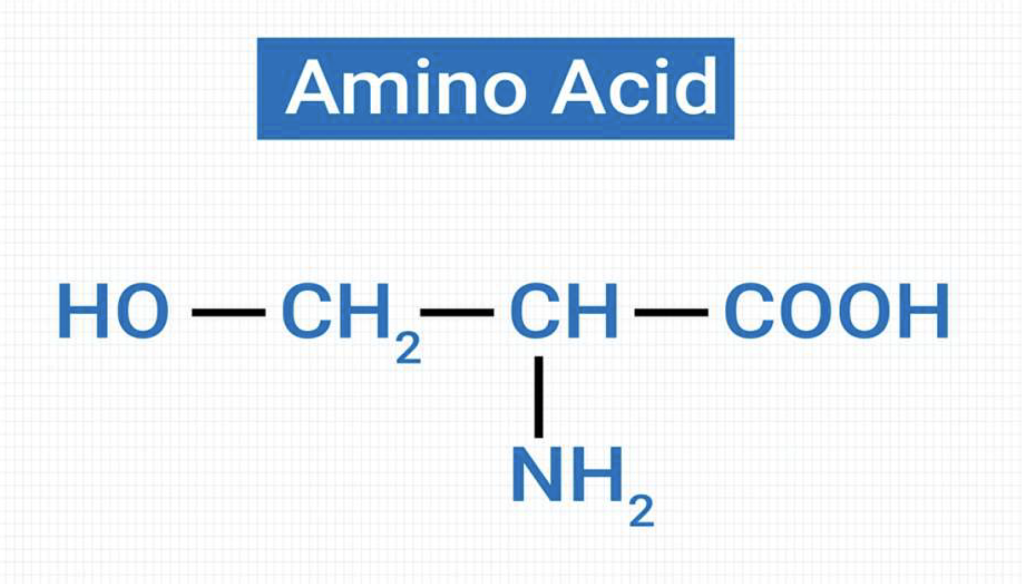
The theoretical advantages of MSPM are supported by modern technical analysis. MALDI-TOF mass spectrometry (ISO 17025-certified) and evaluations conducted at the Kaunas University of Technology (KTU) confirm the integrity of the amino acid profile and its structural characteristics [4]. The matrix contains a high density of key amino acids, such as Glutamic acid (5.78%) and Lysine (2.14%), providing the necessary substrate for tissue repair in catabolic environments. The production process is officially authorized by the State Food and Veterinary Service of Lithuania (VMVT No. 46-18).
| Amino Acid | Content (%) | Amino Acid | Content (%) |
| Glutamic acid | 5.7885 | Threonine | 1.7097 |
| Glycine | 5.0765 | Valine | 1.5205 |
| Aspartic acid | 2.8072 | Isoleucine | 1.1651 |
| Leucine | 2.4877 | Arginine | 1.1243 |
| Lysine | 2.1421 | Alanine | 1.1525 |
6. Conclusion and Directions for Clinical Discussion
The presented model remains a theoretical framework that requires further empirical validation. However, based on existing physiological data and technical validations (including MALDI-TOF mass spectrometry and KTU evaluation [4]), the combination of MSPM and NASP offers a promising direction for supporting patients in severe pathological conditions where traditional metabolic support is insufficient.
References
- Elia M. Protein and amino acid metabolism in critical illness. Clinical Nutrition.
- Fearon K., Strasser F. et al. Definition and classification of cancer cachexia. The Lancet Oncology, 2011.
- Wolfe R. The role of amino acids in metabolic regulation. Journal of Nutrition.
- Damodaran S., Parkin K. Fennema’s Food Chemistry.
- Hall J., Guyton A. Guyton and Hall Textbook of Medical Physiology.
- Kinney J., Tucker H. Physiology, Stress and Malnutrition.
- ESPEN Guidelines on Clinical Nutrition in Cancer Patients. Clinical Nutrition, 2017.
- Shojaei A. Buccal mucosa as a route for systemic drug delivery. Journal of Pharmacy & Pharmaceutical
Sciences. - De Boer A. Rectal drug administration: clinical pharmacokinetic considerations. Clinical Pharmacokinetics.
- Porges S. The Polyvagal Theory: Neurophysiological Foundations of Emotions.
- Thayer J., Lane R. Claude Bernard and the heart-brain connection. Neuroscience & Biobehavioral Reviews.
- McEwen B. Stress, adaptation, and allostasis. Annals of the New York Academy of Sciences.
- https://drive.google.com/file/d/151j4y7BU8yexk5uaG72yrjBnj63T0zLz/view?usp=share_link
We are pleased to confirm that the theoretical framework and clinical rationale for the MSPM and NASP technologies have now been formally registered within Zenodo (CERN) international research repository.
This publication secures the priority of our intellectual property regarding metabolic correction and provides stakeholders with independent verification of the project’s scientific rigour.
The full technical report can be accessed via the following
DOI: https://doi.org/10.5281/zenodo.19563962
Keywords & Hashtags:
MedicalScience; Biotechnology; MetabolicHealth; ClinicalNutrition; MSPM; Neuroscience; Innovation; Biohacking; AminoAcids; LifeSciences; ScientificResearch; Catabolic states; Nitrogen balance; Molecularly Structured Protein Matrix (MSPM); Neuroacoustic Stimulation Protocol (NASP); Metabolic stress; Amino acid bioavailability; Autonomic nervous system.