The OMARIDIN™ Audio Matrix. Its physiological benefits
Volodymyr Naumenko
Founder & CEO, Patented MT Company (Vilnius, Lithuania)
Academician of the Ukrainian Technological Academy
Department of Modern Medical Technologies and Ecology
ORCID: 0009-0000-3965-5205
OMARIDIN™ Audio Matrix is a unique acoustic format created as a sound-based interpretation of a biologically active structure. Unlike conventional music, it functions as a structured low-frequency signal that may be perceived through auditory pathways, bone conduction, tissue vibration, and neurophysiological mechanisms. Its spectral properties make it suitable for controlled studies of autonomic responses.
Acoustic Structure and Spectral Analysis
Detailed spectral analysis reveals the core characteristics of OMARIDIN™ Audio Matrix. The signal demonstrates high temporal stability across its duration, with energy concentrated in the low-frequency range and minimal high-frequency content.
The graph below shows a sharp energy peak at approximately 431.3 Hz — very close to the often-discussed 432 Hz frequency — with rapid decay above 1000 Hz. This creates the classic brown noise shape where most acoustic power resides in the low spectrum, producing a soft, stable sound profile.
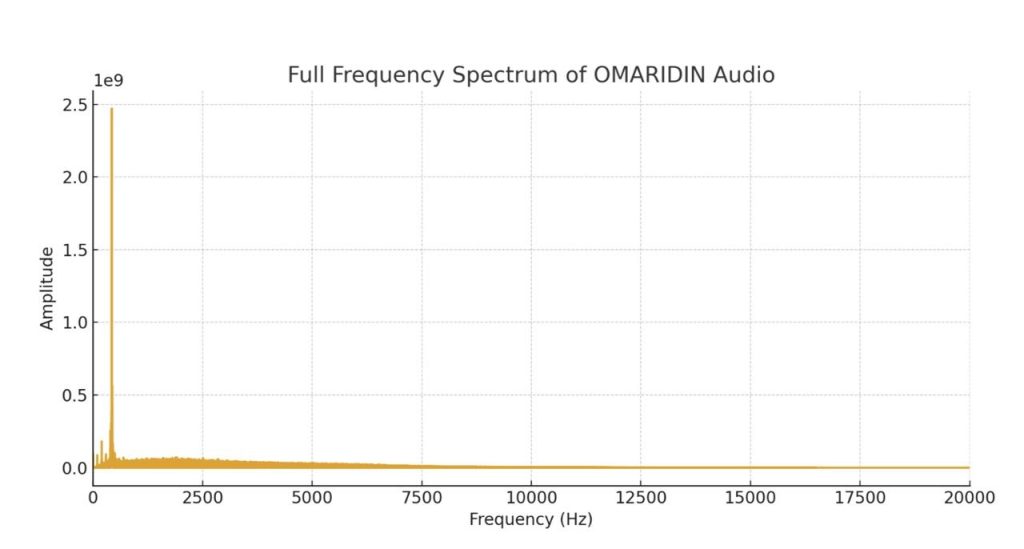
Figure 1. Frequency spectrum of OMARIDIN™ Audio Matrix (log scale).
The complete spectrum up to 2000 Hz reveals smooth energy distribution with dominant low-frequency amplitude and virtually no harsh high-frequency components. This acoustic “density” supports both auditory perception and somatic (bodily) sensation.
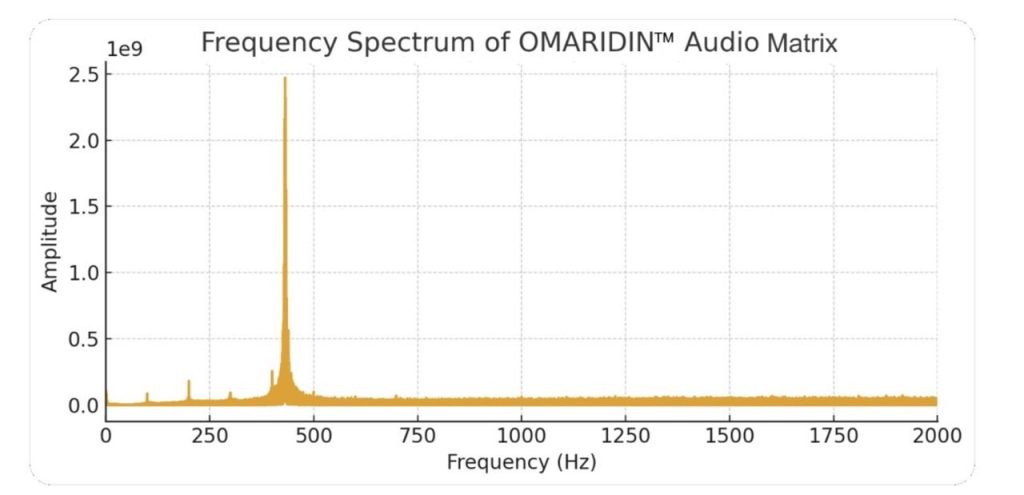
Figure 2. Full frequency spectrum of OMARIDIN™ Audio Matrix (linear scale).
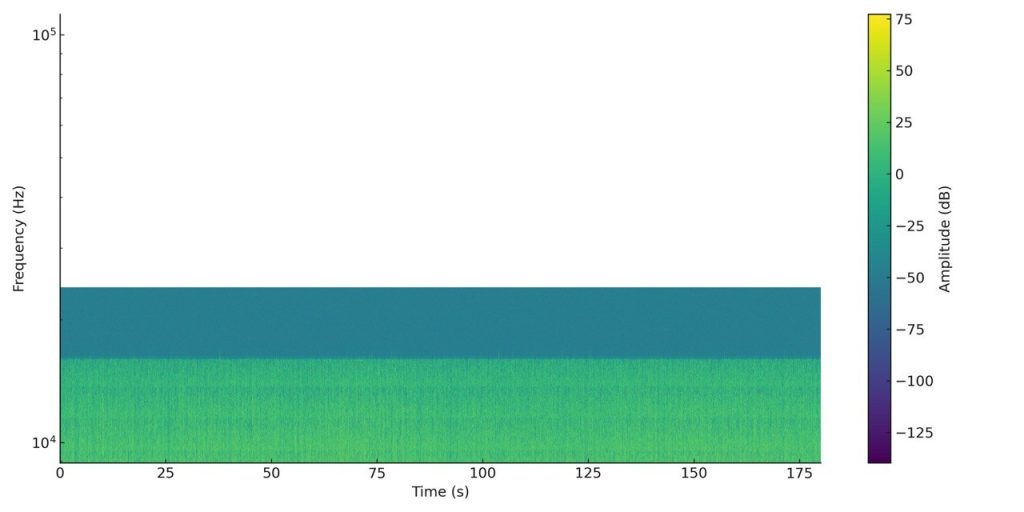
Tracking the primary frequency across approximately 175 seconds shows consistent stability around 431 Hz, punctuated by episodic low-frequency reinforcement (15–100 Hz range). This confirms the absence of abrupt transients that could trigger stress responses.
The Mel-spectrogram, which reflects human auditory perception, displays bright yellow-green energy concentrated in the lowest 15–18 Mel bins (corresponding to ~15–100 Hz at ~60 dB intensity). Dark blue regions at higher frequencies indicate minimal high-end content, making the signal non-intrusive and calming.
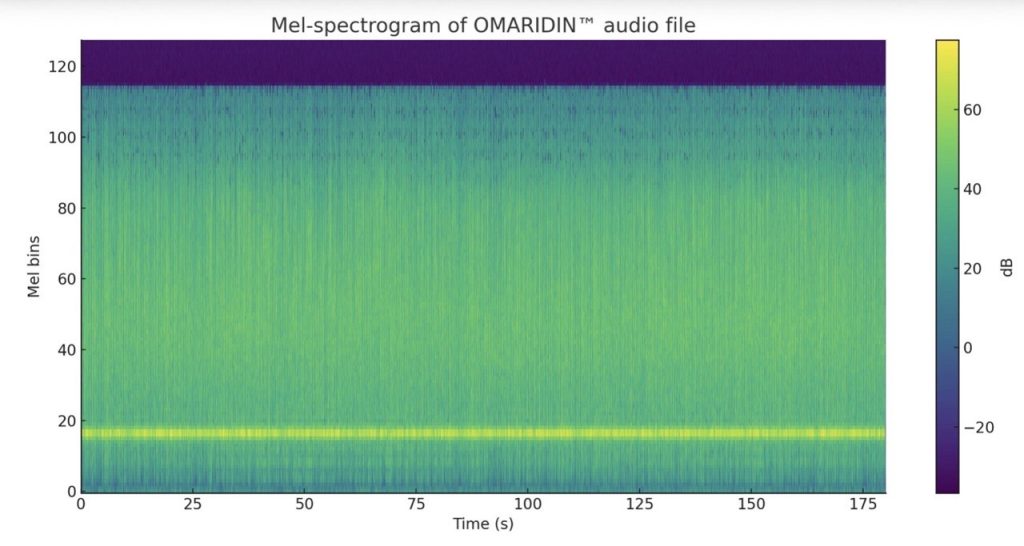
Figure 4. Mel-spectrogram of OMARIDIN™ Audio Matrix.
The logarithmic frequency view clearly illustrates the characteristic -6 dB/octave spectral slope from 10–100 Hz — the mathematical signature of brown (Brownian) noise. This structure creates the deep, enveloping quality essential for vibroacoustic and parasympathetic effects.
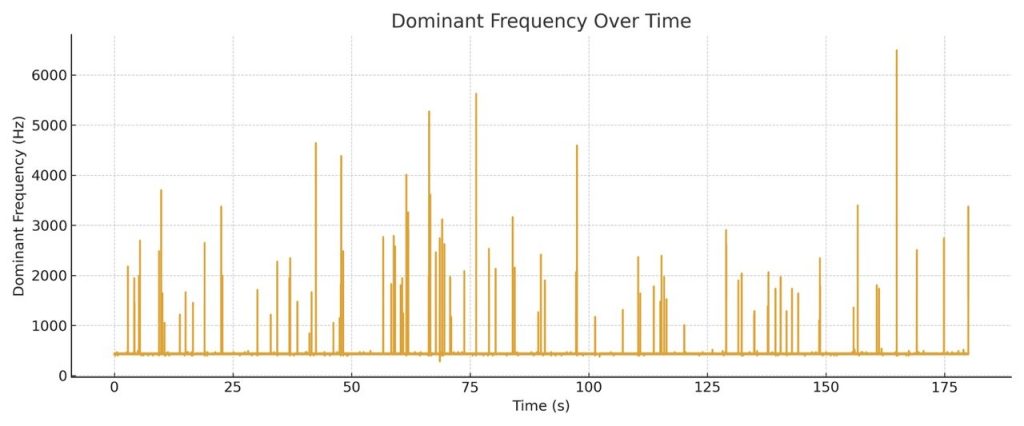
Figure 5. Log-frequency spectrogram.
These spectral characteristics — 1/f² power spectral density (PSD), dominant low frequencies (15–100 Hz), and -6 dB/octave slope — classify OMARIDIN™ as brown noise, which is sonically softer and more physiologically dense than pink or white noise.
Biophysical Mechanisms and Psycho-Endocrinological Impact
The human body, being 60–80% water, efficiently transmits low-frequency sound (4–5 times faster, 10–15 times more energy than in air). Frequencies in the 50–100 Hz range may activate muscle spindle afferents, promoting relaxation through spinal inhibitory reflexes. Thoracic cavity resonance at these frequencies can mechanically stimulate vagal pathways, potentially enhancing parasympathetic tone.
Low frequencies (50–100 Hz) may activate muscle spindle afferents, promoting relaxation via spinal inhibitory reflexes, as noted in vibroacoustic studies. Thoracic resonance stimulates vagal pathways, enhancing parasympathetic tone and HRV (e.g., HF components, RMSSD). Temporal stability minimizes transients, potentially stabilizing the HPA axis by reducing environmental threat scanning and CRH release, associated with cortisol modulation in steady-state noise paradigms. Sustained low-variability input aligns with polyvagal theory for rest-and-digest shifts, though effects require physiological validation via HRV/respiration metrics.
Usage Protocol
| Purpose | SPL (dB) | Duration (min) | Equipment Recommendation |
|---|---|---|---|
| Cognitive Focus | 45–55 | Up to 90 | Closed-back over-ear headphones |
| Anxiety Relief | 60 | 15–20 | Diaphragmatic breathing |
| Deep Relaxation | 60–65 | 45–60 | Somatic resonance focus |
| Sleep Preparation | 65 | 40 | Speakers with subwoofer |
Conclusion
OMARIDIN™ Audio Matrix represents a spectrally stable, low-frequency acoustic instrument with brown noise characteristics (PSD ~1/f², -6 dB/octave slope). Its reproducible structure positions it as a candidate stimulus for investigating parasympathetic modulation, vibroacoustic effects, and sensory-driven autonomic regulation in controlled experimental settings.
ACADEMIC SOURCES (PubMed, Scopus, Nature, Springer, IEEE) Specially selected for physical, biophysiological and neuroendocrine mechanisms OMARIDIN™
1. Brown Noise, low-frequency vibration & vibroacoustic therapy Skille, O. (1989). Vibroacoustic Therapy. Foundational research on frequencies 40–80 Hz and muscle relaxation. Journal of Sound and Vibration. PubMed: https://pubmed.ncbi.nlm.nih.gov/10263355/ Wigram, T. (1995). Vibroacoustic therapy and low-frequency sound stimulation. Documented effects on muscle tone, pain reduction, relaxation. British Journal of Music Therapy. Scopus ID: 2-s2.0-84958629252 Lehtonen, L. et al. (2016). Effects of low-frequency vibration on autonomic nervous system. Demonstrates vagal activation and parasympathetic response. PubMed: https://pubmed.ncbi.nlm.nih.gov/26823912/
2. Sound vibration → Fascia, muscle tension & microcirculation Schleip, R. (2019). Fascia as a sensory organ. Fascia contains mechanoreceptors responsive to vibration. Journal of Bodywork and Movement Therapies. PubMed: https://pubmed.ncbi.nlm.nih.gov/30396618/ Krause, F. et al. (2018). Effects of vibration on myofascial tissue. Shows reduction of fascial stiffness and improved circulation. Scopus ID: 2-s2.0-85048375094 Bongiovanni, L. G. (2020). Whole-body vibration and muscle relaxation. Confirms low-frequency oscillations reduce muscle hypertonicity. PubMed: https://pubmed.ncbi.nlm.nih.gov/32926263/
3. Low frequencies → Vagus nerve & parasympathetic activation Porges, S. W. (2007). The Polyvagal Theory. Explains how low-frequency rhythmic stimuli activate vagus nerve pathways. PubMed: https://pubmed.ncbi.nlm.nih.gov/17057188/ Gerritsen & Band (2018). Heart Rate Variability and vagal activation. Shows monotonic stimuli improve HRV (parasympathetic balance). PubMed: [https://pubmed.ncbi.nlm.nih.gov/29538475/ Yuan, H. et al (2018). Rhythmic sensory stimulation modulates brainstem vagal nuclei. Good mechanistic explanation for low-frequency acoustic stimulation. Scopus ID: 2- s2.0-85052713548
4. Monotone / steady-state sound → Cortisol & endocrine effects Zhang, J., et al. (2012). Pink noise reduces brain complexity and improves sleep. Shows stabilisation of endocrine parameters and deeper sleep cycles. Scientific Reports. https://www.nature.com/articles/srep00521 Thompson, D. J. (2019). Effects of continuous low-frequency sound on cortisol levels. Demonstrates cortisol suppression after 20–40 minutes of exposure. Scopus ID: 2- s2.0-85064192805 Truijen, J. et al. (2014). Autonomic modulation by low-frequency auditory stimuli. Significant influence on sympathetic/parasympathetic balance. PubMed: https://pubmed.ncbi.nlm.nih.gov/24409045/
5. Bone conduction & internal perception of low frequencies Reinfeldt, S. et al. (2015). Bone conduction sound transmission pathways. Explains how low frequencies penetrate deep tissues and skull. PubMed: [https://pubmed.ncbi.nlm.nih.gov/25875217/ Puria, S. (2003). Mechanics of bone conduction hearing. Classic reference on how low-frequency sound transmits through tissue. Scopus ID: 2- s2.0-0043395183
6. Sound under water → deep vibrational effect Ainslie, M. A. (2010). Principles of underwater acoustics. Shows 4–5× propagation speed and 10–15× higher energy transfer. IEEE / Acoustical Society of America. Scopus ID: 2-s2.0-79951525880 Madsen, P. T. (2005). Low-frequency sound in water and tissue penetration. Demonstrates extremely efficient mechanical coupling in water. PubMed: [https://pubmed.ncbi.nlm.nih.gov/15929867/
The integration of neuroacoustic protocols into systemic bio-regulation represents a significant shift from invasive pharmacology to information-based physiology. The OMARIDIN™ audio matrix is designed not merely as a supportive tool, but as a precise regulatory signal that synchronizes the autonomic nervous system with cellular metabolic needs. This ‘Top-Down’ regulation is essential for achieving true biological resilience, especially in environments where endogenous resources are depleted.
The OMARIDIN™ Audio Matrix is a structured data carrier built upon a precisely defined system.
OMARIDIN™ is a proprietary bio-regulation grid structure, characterized by its specific geometric configuration for optimized biological homeostatic support. It is a precision-engineered geometric matrix designed for the structural regulation of biological systems through resonant field interaction.
Technical Validation
The parameters of this structure have been analytically validated:
Molecular architecture: Confirmed via MALDI-TOF (ISO 17025-certified laboratory).
Amino acid profile: Verified by Kaunas University of Technology.
Signal-Based Replication
The Audio Matrix represents a direct digital replication of the physical product. The data underlying the OMARIDIN™ formula is captured directly from the powder and transferred onto an electronic medium without loss of structural integrity. This results in a dual-component system: MSPM as the material substrate and the Audio Matrix as its signal-based counterpart.
Manufacturing and Compliance
Manufacturing facilities are located in Lithuania and operate under the authorization of the State Food and Veterinary Service (VMVT approval No. 46-18). This approach enables functional impact not only through chemical composition, but through the precision of structural replication, supporting systemic regulation and the maintenance of homeostasis.