A conceptual perspective on metabolic stress as an upstream regulator of male physiological resilience and reproductive function
Volodymyr Naumenko
Founder & CEO, Patented MT Company (Vilnius, Lithuania)
Academician of the Ukrainian Technological Academy
Department of Modern Medical Technologies and Ecology
ORCID: 0009-0000-3965-5205
Conceptual illustration and theoretical framework exploring metabolic stress as a foundational, common upstream regulator of multiple physiological control systems.
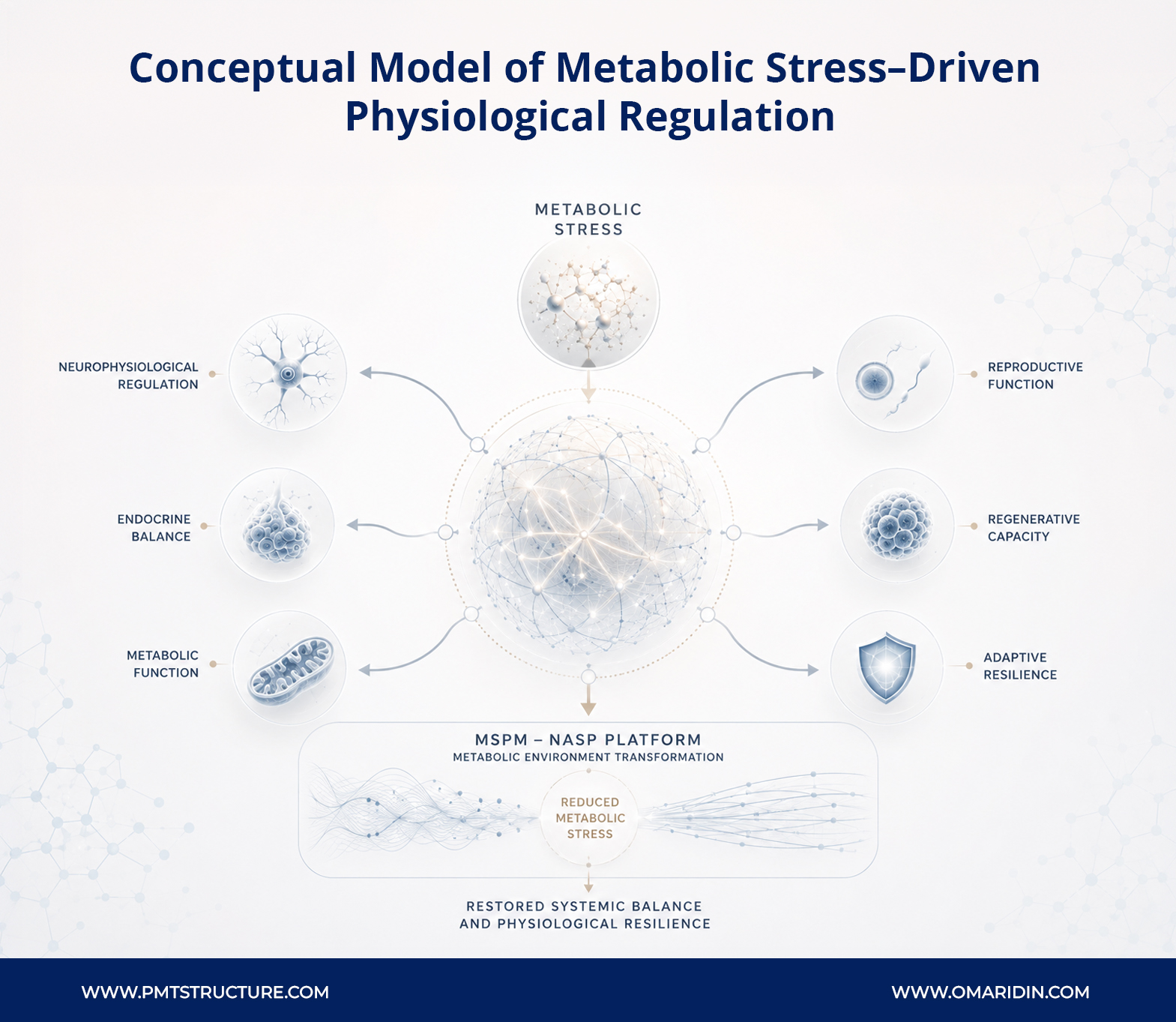
While traditional approaches to male physiological resilience and reproductive health frequently target isolated endocrine pathways or specific hormonal deficiencies, this paper introduces a paradigm shift. It proposes a systems-biology model suggesting that subclinical metabolic stress and altered resource allocation serve as the primary upstream drivers of functional decline, long before clinical pathologies appear.
The work introduces a novel concept: how a combined biochemical and neurophysiological approach (the MSPM-NASP platform) operates not by direct hormonal manipulation, but by fundamentally transforming the systemic metabolic environment. This framework redefines the path to restoring endogenous male vital functions, opening a vital scientific discussion on achieving systemic biological resilience rather than temporary symptomatic intervention.
Full publication available via DOI: https://doi.org/10.5281/zenodo.21334978
Author Commentary: Why Metabolic Stress May Be the Missing Variable in Male Physiological Decline
Most discussions of male ageing focus on individual symptoms: low testosterone, reduced fertility, muscle loss or fatigue. Yet these may not be isolated problems. From a systems biology perspective, they can be viewed as coordinated adaptations to chronic metabolic stress.
The body continuously allocates finite resources between survival, maintenance, regeneration and reproduction. When metabolic stress becomes chronic, resources are redirected toward immediate survival. Activation of the HPA axis and elevated cortisol suppress reproductive and anabolic functions, reduce testosterone production, slow tissue repair and accelerate catabolism. In this context, declining reproductive function may represent an adaptive response rather than a primary defect.
This understanding underlies the MSPM–NASP concept.
NASP (Neuroacoustic Stimulation Protocol) is designed to reduce the physiological burden of chronic stress by supporting parasympathetic activity, improving vagal tone and helping restore a more favourable regulatory environment.
MSPM (Molecularly Structured Protein Matrix) addresses the metabolic side of the equation. The concept proposes that protein architecture influences biological utilisation efficiency. By supporting nitrogen retention and reducing unnecessary metabolic expenditure, MSPM aims to improve the availability of structural resources required for recovery, regeneration and endocrine support.
Together, NASP and MSPM address complementary aspects of the same challenge: reducing unnecessary resource expenditure while improving biological efficiency. The objective is not to force physiological systems to work harder, but to restore the conditions under which normal function can emerge naturally.
This raises an important question: can improving metabolic resilience help recover functions that the organism has temporarily suppressed under chronic stress?
That is the central hypothesis explored by the MSPM–NASP framework.
— Volodymyr Naumenko
Founder & CEO, Patented MT Company